Why the Base Under Your Paver Patio Matters Most
A paver patio's pattern gets all the attention on install day, but the compacted base six inches down is what decides how it looks in five years.
September 9, 2026 · 3 min read
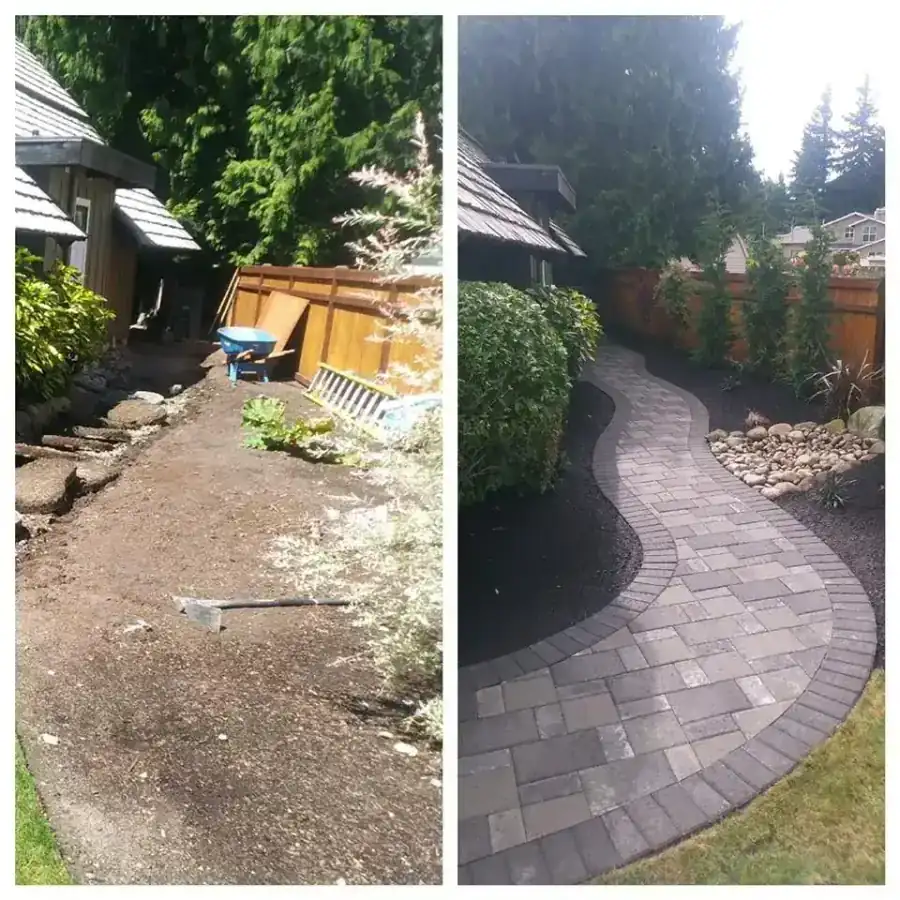
Everyone judging a new paver patio does the same thing. They look at the pattern, run a hand across the surface, check how the color reads in the afternoon light. Nobody looks at the part of the job that actually decides whether that patio is still flat and tight in five years, because by the time you can walk on it, that part is already six inches underground and out of sight for good.
The base is most of the job, even though you never see it
A paver patio is really three layers doing three different jobs, and only the top one is decorative. Under the pavers themselves sits a layer of bedding sand, thin and screeded dead level, that lets each paver seat evenly against what is below it. Under that sits the real structural layer, several inches of crushed, compacted aggregate base, and under that, the native soil has to be graded and compacted too, not just left however it happened to sit when the crew arrived. In terms of labor and material, the base is where most of the job's actual effort goes, and it is also where corners get cut on a rushed install. The pavers themselves go down comparatively fast once that base is right.
Why Puyallup soil makes this step non-negotiable
This matters more here than it would somewhere with sandy, free-draining ground. Pierce County soil runs heavy on clay and glacial till in a lot of neighborhoods, and clay does two unhelpful things at once: it drains slowly, so water sits instead of moving through, and it expands and contracts as it wets and dries across our wet winters and genuinely dry late summers. A patio base built on compacted aggregate over properly graded soil handles that seasonal movement without much drama. A patio built on a thin base sitting directly over native clay does not, and it tends to show that difference within a winter or two rather than waiting a decade to reveal itself.
What good grade and drainage actually look like
A patio needs a slight, deliberate slope away from the house, typically a small drop over the patio's run, so rainwater sheds off the surface instead of pooling against a foundation wall or a door threshold. That slope has to be built into the base itself, not faked with extra bedding sand at the low end, because sand alone will not hold that shape once it settles under foot traffic, furniture and a full season of rain.
How to tell a good base from a bad one, a few winters later
The base did its job if the patio still reads flat underfoot, if there is no standing water anywhere on the surface after a heavy rain, and if the joints between pavers still look tight and even rather than gapped or shifted out of line. A base that was rushed or skipped tends to announce itself in specific, recognizable ways, usually starting in the second or third winter rather than the first.
- Individual pavers or whole sections sinking unevenly, creating low spots that hold water long after the rain has actually stopped
- Noticeable heaving in winter, where a paver or a run of pavers pushes up higher than its neighbors as the ground beneath it freezes and thaws
- Joint sand washing out repeatedly at the same spots, which usually points to water concentrating and moving underneath rather than shedding across the surface as it was designed to
- A patio that felt solid the first summer but developed a soft, springy feel underfoot a year or two later, a sign the base never compacted the way it should have from day one
Getting it right from the start
None of this is complicated to do correctly. It just cannot be skipped, rushed, or approximated, because everything above the base inherits whatever problems the base has, invisibly, for as long as the patio exists. Whether you are planning a simple paver walkway, a full patio, or pavers around a pool, the base preparation and the grading underneath it deserve the same attention as the surface pattern everyone eventually notices and compliments. If you already have a patio that is starting to show the symptoms above, or you are planning a new one and want it built to actually last through Pierce County winters, that is exactly the kind of question worth bringing to a free on-site consultation before any ground gets disturbed.
Archterra Landscape Services, (253) 815-8365
Call (253) 815-8365More articles
Do You Really Need Irrigation in the Pacific Northwest?
The Pacific Northwest's rainy reputation hides a real, dry summer that catches Puyallup lawns off guard every year.
What Actually Holds a Retaining Wall Up
The blocks get all the attention, but the drainage behind them is what actually decides whether a retaining wall survives its first few Pierce County winters.