A Year of Grounds Maintenance in Pierce County
What a Pierce County property needs from its maintenance crew changes every few weeks, not just every season.
September 9, 2026 · 3 min read
Grounds maintenance in Pierce County is not one task repeated fifty-two times a year. What a property actually needs shifts constantly with the season, and a maintenance plan that treats January the same as July is missing most of what keeps a landscape looking intentional rather than merely mowed.
Late winter, January through February
This is the quiet stretch, and also the most important one to not skip. Irrigation systems, if not already fully winterized, need a final check before any cold snap. Structural pruning on dormant trees and shrubs happens now, while there is no leaf cover to hide the branch structure, which makes it the right time to shape a shrub or remove damaged wood without guessing at what is underneath the foliage. Moss, a near-permanent feature of any shaded Pierce County lawn through the wet months, gets treated now before it spreads further into turf that is already stressed by low light and standing moisture.
Early spring, March through April
As growth resumes, irrigation start-up becomes the priority: pressurizing lines, checking every head for winter damage, and adjusting coverage for beds that have filled in or thinned out since last season. This is also when moles become genuinely active again, pushing up mounds across lawns as they hunt for grubs and earthworms in softening soil, and it is the window to get ahead of that before the damage spreads across a whole yard. Fertilization programs typically start here too, giving turf a real push right as its growing season begins in earnest.
Late spring into early summer, May through June
Growth accelerates fast through this stretch, and mowing and edging frequency has to keep pace with it rather than falling a week behind. Weed control matters more here than almost any other point in the year, since spring weeds establish quickly in the same warm, damp conditions that push grass growth. Pruning shifts from the structural winter work to shaping and maintaining plants actively in growth, and irrigation scheduling needs its first real adjustment of the year as days lengthen and temperatures climb.
Summer, July through August
This is when the region's dry reputation gets tested and usually fails it. Despite what the rest of the year suggests, Pierce County summers run genuinely dry, and irrigation monitoring becomes the single most important task of the season. A system running on a spring schedule through a hot, dry August will under-water fast, and turf and beds show that stress within days rather than weeks. Plant health monitoring matters here too, since heat and drought stress make plants more vulnerable to pests and disease they would otherwise shrug off entirely.
Early fall, September through October
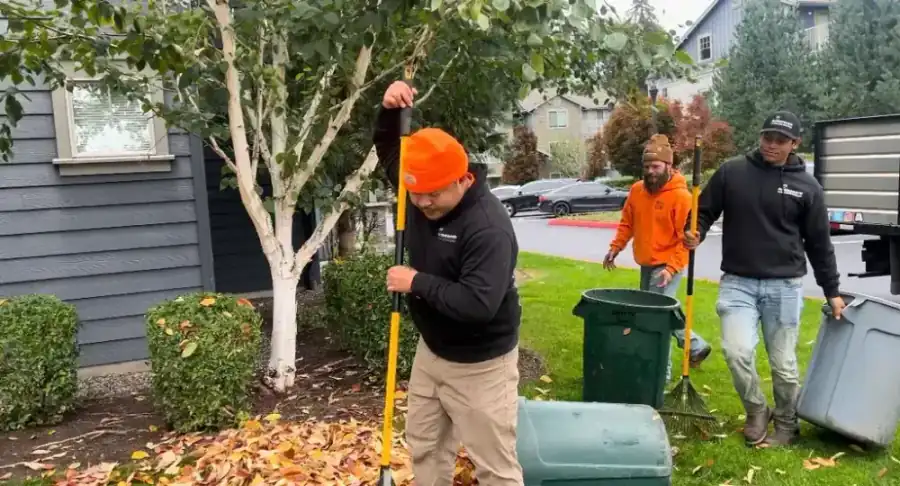
As growth slows and rain returns, mowing frequency starts to taper and fall fertilization supports root development heading into the wetter months ahead. This is also prime seasonal cleanup territory: the first real leaf drop begins from maples, big-leaf and otherwise, and from the deciduous trees mixed throughout most Pierce County properties, and letting leaf litter sit and mat down on turf through a wet fall smothers grass fast.
Late fall into winter, November through December
Three tasks matter most in this window, and missing any of them tends to show up as a spring problem instead of a winter one.
- Full seasonal cleanup of beds and lawns, clearing leaf litter before it compacts and mats under the season's heaviest rain
- Irrigation winterization, since a system left full of water through the first hard freeze can crack lines and backflow assemblies that are expensive to replace
- Mulch application in beds, which protects root systems through the coldest stretch and helps suppress the weeds that would otherwise get a head start come spring
Why year-round management works better than seasonal calls
Handling maintenance as a series of one-off calls, mowing here, a cleanup there, tends to miss exactly the transition points above, the two or three weeks each season where a specific task actually matters and the window for it is narrow. A managed program that moves with the calendar, rather than reacting to how bad a lawn looks after the fact, is the difference between a property that always looks intentional and one that swings between neglected and scrambling to catch up. Archterra's landscape management team covers residential, multi-family and commercial properties across King and Pierce County year-round, with a dedicated account manager for larger properties, so the seasonal transitions above get handled on schedule rather than after the damage is already visible.
Archterra Landscape Services, (253) 815-8365
Call (253) 815-8365More articles
Do You Really Need Irrigation in the Pacific Northwest?
The Pacific Northwest's rainy reputation hides a real, dry summer that catches Puyallup lawns off guard every year.
What Actually Holds a Retaining Wall Up
The blocks get all the attention, but the drainage behind them is what actually decides whether a retaining wall survives its first few Pierce County winters.